Sea for Yourself: Playground Lighting Turns a Jellyfish into a Luminous Attraction
How do you take the sting out of a jellyfish’s tentacles? Make it a kid-friendly, glow-in-the-dark climbing tower.
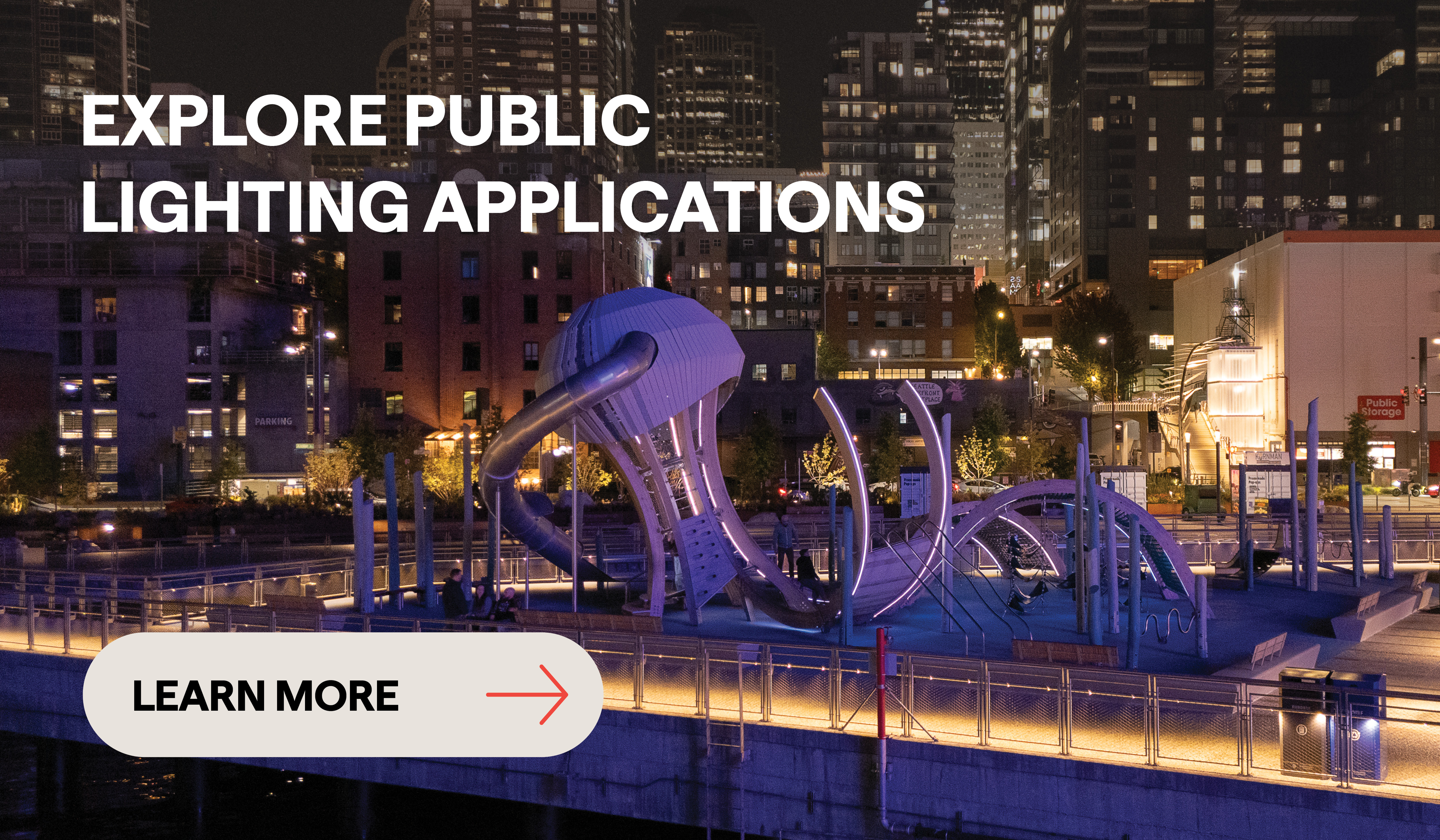
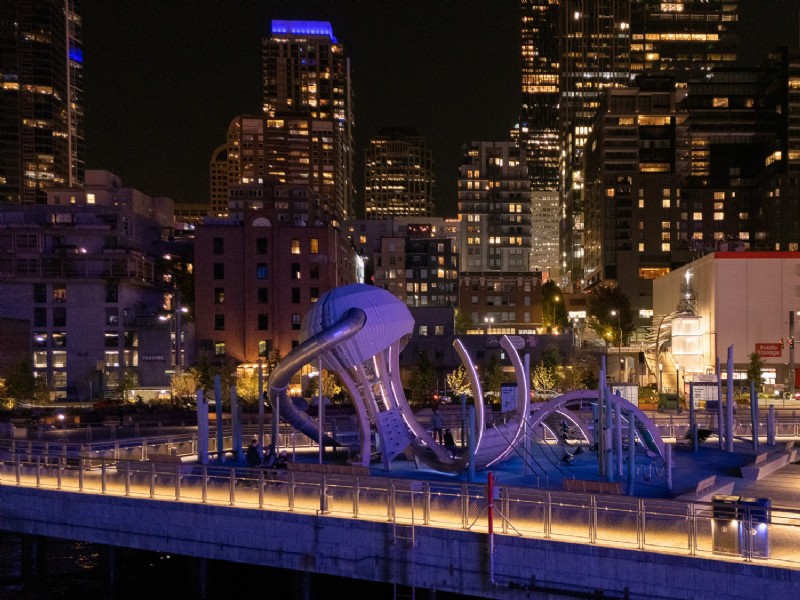
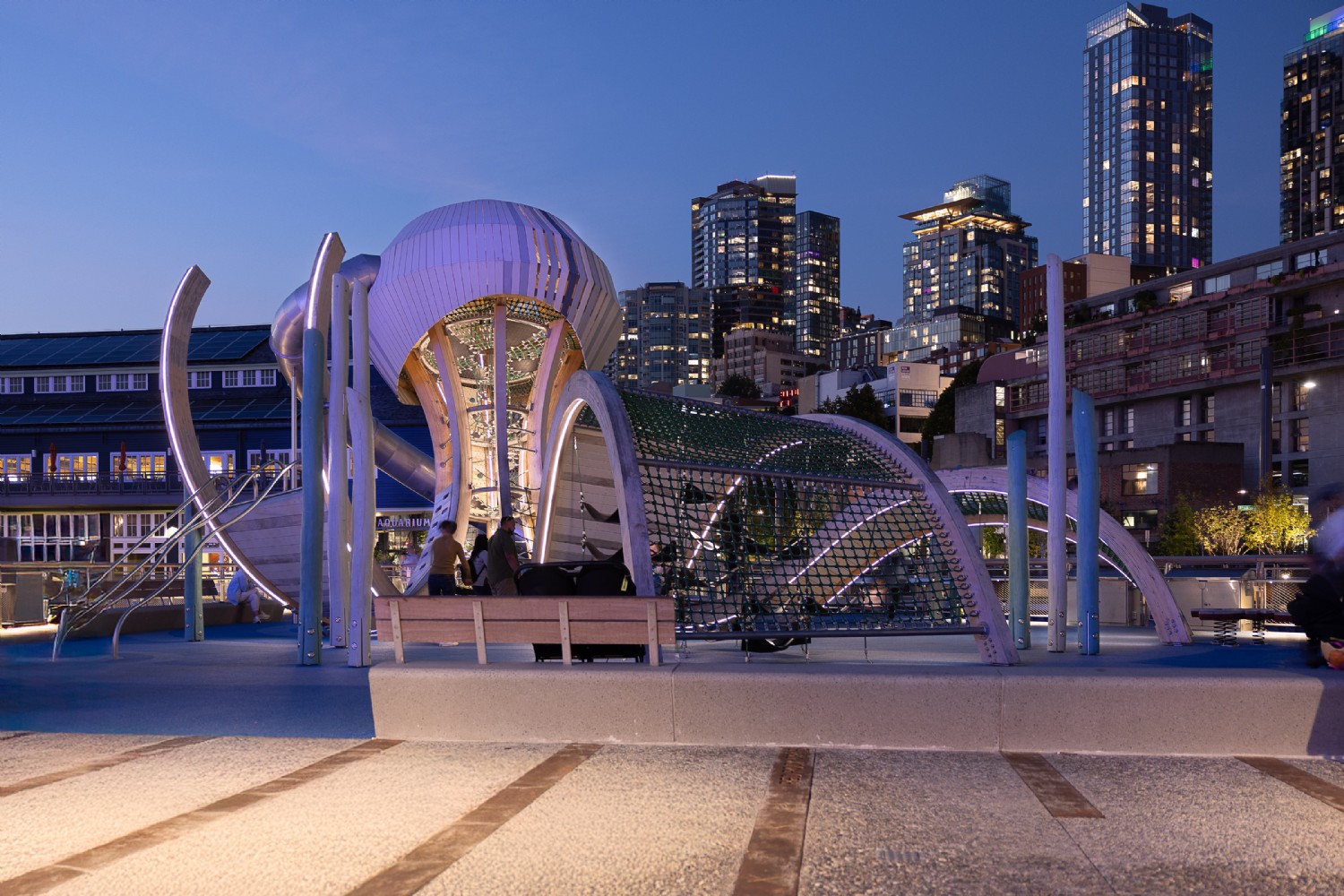
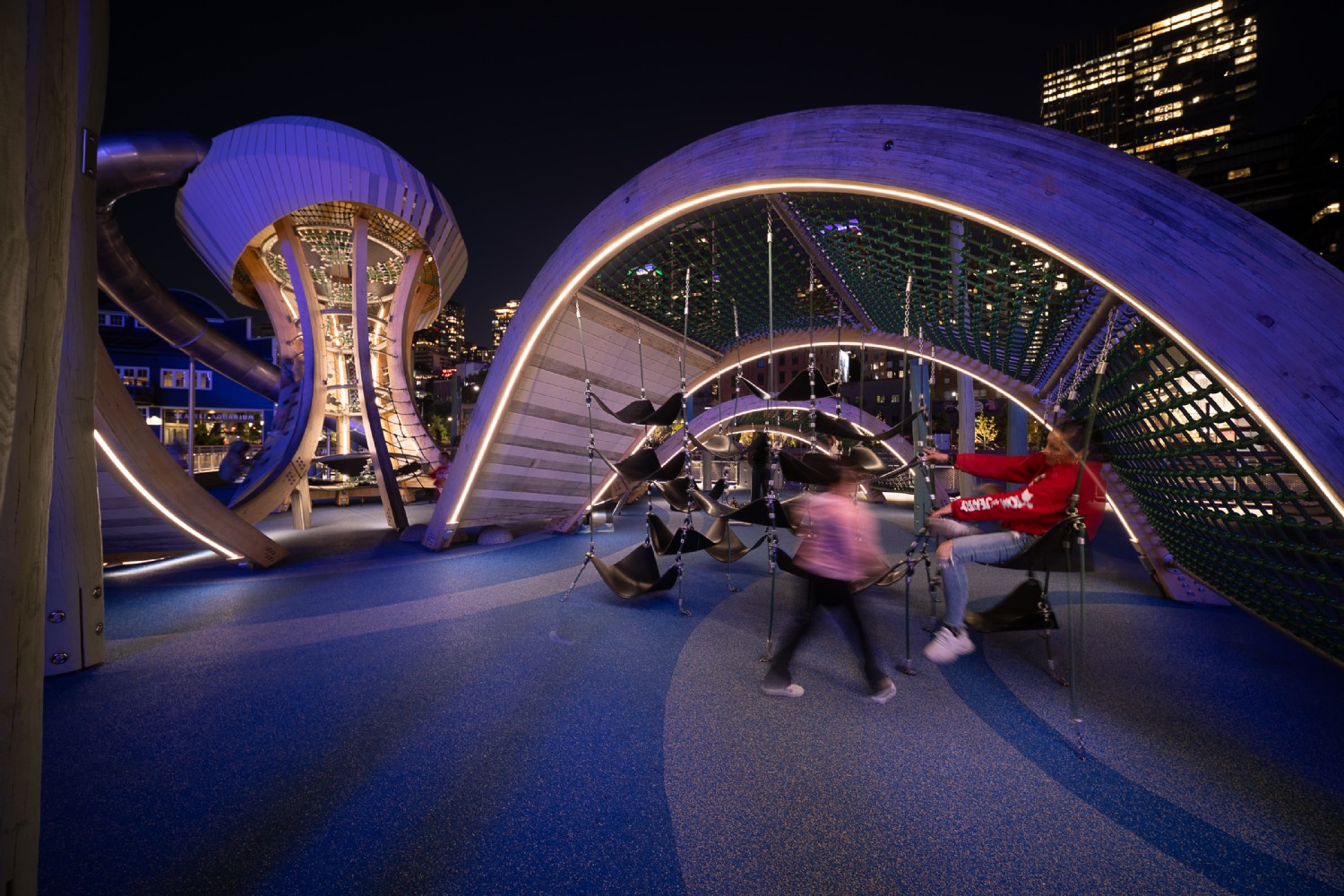
Welcome to Seattle’s Pier 58, the luminous result of the city’s $800 million investment that added 50,000 square feet of public space to the central waterfront. The star of the new sea-themed play area is a 25-foot-tall jellyfish climbing tower. The installation featuring swooping tentacles, climbable nets, 18-foot slide, and even a cluster of crab wobble boards, is a colorful example of urban lighting that helps kids reach new heights of delight.
 The area’s revitalization hinges on public space lighting that transforms the space into a vibrant and alluring after-dark destination. QTL helped the marine theme integrate with the waterfront’s urban design and attract kids like a ringing ice-cream truck.
Lighting designer, Stephanie Wood, Associate Principal of Seattle’s Dark Light Design, used her extensive design experience to create enlightened ways to enhance and inspire the central waterfront space that sits in the shadows of the beloved Great Wheel Ferris Wheel.
With some assistance from QTL lighting, Pier 58 is an immersive nighttime destination that creates new social spaces and highlights a series of unique design elements. “Lighting played a key role in the design,” commented Stephanie. “When the sun goes down and nighttime falls, lighting transforms the park. The north end is activated with color-changing fixtures, to create some fun, so people are drawn to it and want to walk out there and play.”
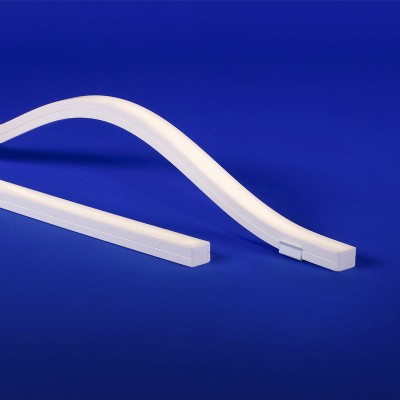
QTL’s flexible Q-CAP BOXA RGBW with its up/down bending capability helps the jellyfish glow with a seamless line of colorful lights in the structure’s tentacles. The decision to use a durable outdoor fixture was easy. BOXA is a flexible fully encapsulated fixture with consistent light as well as an IK10 impact rating (the highest level of protection) that helps the structure’s lighting fixtures resist damage from vandalism, accidents and severe weather.
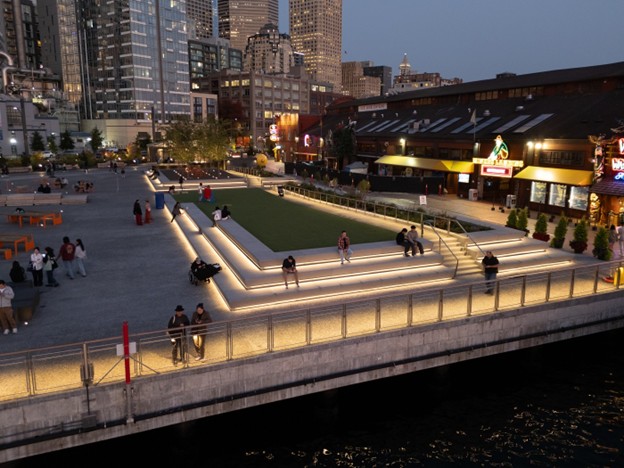
Stephanie added, “The south end features low-level seats and steps that create a relaxing area where you want to come and just sit to enjoy the city and water views.” Once again, Q-CAP BOXA was specified here, this time with Static White.
The integration process wasn’t always a day at the shore. “We did encounter some challenges in the in the design of this space and how the fixtures integrate into the structures,” Stephanie recalled. But soon, she developed a creative built-in solution.
“On the cast seat-steps, we had to detail how the fixture was going to mount so that it's not visible from anywhere at ground at grade level, then how the power fed through the backside,” she explained.